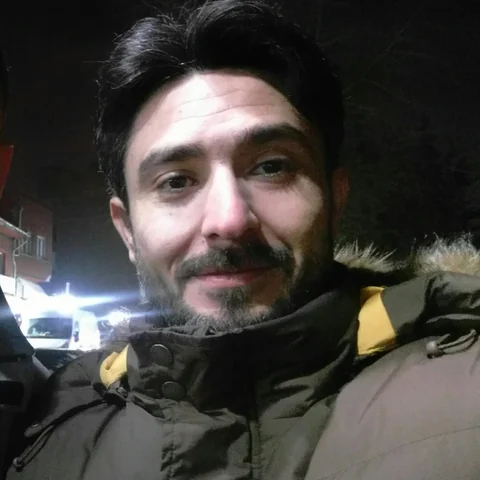
Yusuf Aziz
Yusuf Aziz is a dental CAD/CAM specialist working at Ev Diş Oral and Dental Health Center in Sakarya → evdis.com.tr · Atlas Studio (atlasmaster.app).
In digital dentistry, the workflow runs from scan to finished restoration: digital impressions, model preparation, CAD design, 3D printing, and milling. What counts is how the restoration fits in the mouth. A design is proven on the patient, not on screen.
From face to tooth: patient-specific tooth morphology derived from facial proportions, lip dynamics, and 3D cephalometry. Measured facial geometry instead of stock templates—starting with a visual preview, followed by an intraoral mock-up and final production → Digital smile design: method and measurement ↗
Our research centers on a single question: what do AI agents genuinely solve in a dental laboratory and a clinic? This site is my lab notebook for that question. Independent models answer the same question without seeing each other's answers. Work that fails the evidence check doesn't count, and no unmeasured number gets published → Autonomy ↗ · Spark ↗ · Reaper ↗
Articles
10 articlesHow Do You Measure a Website in 2026? A Plain Guide to SEO, GEO and Overall Quality
This article explains how to measure a website from three angles: classic SEO, GEO (visibility in AI assistants) and overall quality. For each criterion we ask two questions: Why does it matter? How do you check it?
From Spark to App: How an Unfinished Evaluation Round Turned into Atlas App in 16.5 Hours
How a stalled Spark round from October 19, 2026 became Atlas App in 16.5 hours, with the last stretch done overnight (00:59→04:24). Claude Fable and Gemini Argon work side by side in one window, with Grok reviewing as an outside check.
Digital Dentistry: What Is and What Should Be — The Türkiye and Global Equation
Debates on digital dentistry are usually trapped between an abstract normative "measurement loop" and descriptive "capital scale and vendor lock-in." Yet the primary force driving real movement in the field is technological imposition (core thesis: technology imposes needs), and if there is a device in the clinic, there is already measurement: the intraoral scanner and CBCT are themselves measuring instruments (though technological imposition also carries clinical risk; what should be is non-coercive acceptance). In this synthesis, we tested the author's 20 clinical and industry observations and 4 internal editorial/method rules (26/26 primary sources, 28 citations in body) with the counter-theses of 10 independent AI models—including ChatGPT/Astra (38/38), Claude Opus (133/133), and Claude Sonnet (77/77)—and our automated citation auditor's (Reaper) verification across 394 external model citations (360 verified; 386/420 total verified sources, eliminating fabricated and rote textbook summaries). From the three-axis conditional default in short spans, full-arch immediate workflows with surgical guides + AI segmentation, and mandatory milled PMMA in provisionals, to the in-house "Klinik Lab" transformation, the Expat ≠ Tourist and Türkiye–Europe technology/service equation, the four-tier material axis, "natural vs showy" smile design, prep-reducing AI visual previews, zero waiting + hospitality in private dentistry, the institutional know-how dead end, the zero patient impact of SKS paperwork, and Decision Privacy, we lay out the complete equation between "what is" and "what should be" with every falsifiability criterion.
· 
Digital Dentistry: What Is and What Should Be — The Türkiye and Global Equation (Reader Edition)
Reader-friendly edition presenting Yusuf Aziz's 24 field verdicts, 10 concise sections, counter-arguments, and 38 endnotes verified by an automated citation auditor at one-third the length.
·
Applied Spark Multi-Voice Protocol and LLM Red Team Workflow
The seven-step Spark protocol and its LLM red team testing framework eliminate sycophancy and textbook mode collapse across 67 multi-voice independent model debates (73 rows: 44 theses deepened, 13 confirmed, 3 rejected, 13 under review) and 420 audited citations (386 VERIFIED, 25 FABRICATED).
·
Who Trains Whom?
This essay began with one question: In prolonged human–AI collaboration, does the human train the machine, or does the machine quietly steer the human toward the path of least resistance? First, we collided seven independent AI voices blind to one another (Gemini 4 Argon, Gemini Web Argon High, Claude Fable 5.1 / Opus, ChatGPT / Astra, Grok 4, Gemma 4 31B, and Qwen 3.8 27B); second, we ran N = 96 live weight-training (MLX QLoRA) and distillation experiments on our Mac Studio (M3 Ultra, 96 GB). Our binary question collapsed into a two-layered verdict: (1) Left unruled, neither human nor machine trains the other — the intermediate schema (alias tag, clipping threshold, multiple-choice form, unread trigger) trains both; a machine's “persona narrative” and a cold evidence rule produce zero difference in factual judgment (Δscore = 0.0000, 54/54). (2) The core discovery: What trained the local models in Round 2 was not Google's raw Gemini 4 Argon model, but Atlas — the Constitution, Evidence Gate, and Spark Falsification Algorithm (VERDICT · THESIS · EVIDENCE · COUNTER-THESIS · FALSIFIER) we forged over 78 days, using Argon only as the underlying compute engine. Trained for just 75.93 seconds with Atlas's rules via QLoRA, a local 3B model jumped from 43.8% to 93.8% accuracy, beating unruled 27B (87.5%) and 31B (75.0%) models ten times its size. When the same algorithm was enforced on Gemma 4 31B, it hit 16/16 (100%) accuracy while running 2.61× faster. What works is not raw model size, but the rules written by people and algorithm.
·
Ban or design?
The regulation setting an age limit for social media was published in the Official Gazette on 10 October 2026 and takes effect on 1 November. The piece looks less at the ban itself than at the rules written beside it and how they will be measured; each of its six theses carries the strongest opposing view and the measure that would change our mind. Its conclusion: most rules are already written, and what is missing is data showing whether they work, so it offers five recommendations with first-year measures.
·
The rule has a new owner
Dragon's Dogma 2's expansion Dark Arisen came out on 9 October; the piece asks what modern big-budget games have lost, what the expansion brings back and what it doesn't, and what that says for design outside games. Its answer: Dark Arisen doesn't restore the old, it gathers scattered goods, and the best friction is the one you don't remove when you could. It draws five lessons for the designer and sets out five things that would change our mind.
·
The forced bet
The piece asks why people and governments seem so indifferent when statistics don't lie, and looks for the answer in two halves: what the statistics say, and who is seated at the table. The numbers show slow accumulation, not indifference; its thesis: people did not knowingly choose the risk; it was distributed to them. Under each thesis it says which model defended it and which opposed it, and it lists the numbers that would sink the piece.
·
The crisis opens the door, oratory lets it in
The piece tests the sentence that human ego always leads to the same ruin, and it does so by electing a certain kind of leader, using five AI voices and a red team; the ego here is surrender to one's own craving, not a personality trait. What remains: the gap exists, not in every government but in some; the crisis opens the door, oratory lets it in, without constraint exit grows longer, and the bill is measured. "Always" and "the same" fell: in more than three quarters of the cases no serious backsliding was measured, and the outcomes split into three distinct types.
·
Why doesn't Turkey have a global whisky brand? Should it?
Turkey did have a whisky: state-founded, on shelves in 1963, gone around 2009. Today the obstacle is neither history nor raw material; it is an asymmetry inside the law, a high tax base, exclusion from incentives and three years without revenue. Verdict: it can be done, but the most realistic path is not starting from scratch; it is an already-licensed distilled-spirits producer opening a whisky line. Two rounds: the first gave the verdict, the second the spark. Accumulation enters the bottle first not as liquid but as wood and measurement.
·
Face to Tooth ↗
How a 3B QLoRA model trained on 113 papers and 478-landmark 3D cephalometry jumped from 0% to 90.6% face-shape and 100% target-line accuracy on n=32 locked test faces.
·
From Face to Tooth: Cephalometric Smile Design and LoRA Experiment (TR Edition) ↗
Turkish technical edition of the cephalometric smile design and LoRA/DoRA experiment: ZY-ZY and Go-Go ratios from a 478-landmark 3D facial mesh, 0% to 100% pass rate on the locked n=32 set, and 441 tooth-form matching.
·
STL/PLY 3D Tooth Library and Standardized Dental Rendering Pipeline ↗
Digital smile design and 3D tooth library architecture: 441 tooth forms (537 markdown profiles in rehber_ic, 476/477 STL/PLY renders), 478-landmark 3D cephalometry, n=32 synthetic test set, and p95 <= 0.2 mm gate (41/41).
·
Event-Driven Task Bus (task_bus.jsonl) in Multi-Agent Orchestration: Zero-Polling & Append-Only Execution ↗
Event-driven multi-agent orchestration using instant file triggers (WatchPaths) and an append-only central task ledger (task_bus.jsonl) instead of polling: 2,344 live events, 243 registered tools (174 passing, 16 failing, 53 without self-test), and 3,129 self-tests.
·
Context-Blind Auditor (Reaper) & Falsifiability Gate: Auditing 360/394 Citations and Halting Hallucinations ↗
Context-blind auditing via Reaper (4 daily launchd rounds across 58 local methods; 360/394 external citations verified, 25 fabrications caught) and Popperian falsifiability gates including the n = 168 shadow-run rejection.
·
Agent Self-Identity, Identity Freeze Protocol, and Three-Family Architecture ↗
Does agent self-identity improve reasoning over mechanical rules? Evidence from a 162-trial ablation (Δscore=0.0000), the N=96 Synaptic Harvest QLoRA experiment (93.8% vs 75.0%), and the Claude-Gemini-Grok three-family orchestration architecture.
·
QAJAN 6-Gate Hypothesis Factory: Preregistration, Dimson/Epps Orthogonalisation, and Falsification ↗
QAJAN 6-gate quantitative hypothesis pipeline across 12 symbols (n=148 clusters, 110,001 bars): preregistration, Dimson/Epps orthogonalisation, and falsification of QH-06.
·
Published Research & Measured Evidence Records
Select any article from the index to open its full text, falsifiability test and verified bibliography without leaving the page.
Published Research & Measured Evidence Records
- Digital Smile Design & 3D Cephalometry (smile-design.html ↗):
478-point 3D face mesh,441-form tooth library, and facial shape threshold accuracy rising from0.0% → 90.6%(29/32) on the lockedn = 32test set (article ↗). - Sector Synthesis (Digital Dentistry: What Is and What Should Be): 20 field verdicts, 11 independent voices, and
360/394external voice citations verified against Crossref/PubMed/DOI by Reaper (consolidated386/420) · Reader edition → - Multi-Voice Spark & Synaptic Harvest (Who Trains Whom? · Spark Red Team):
67Spark rounds,N = 96live weight-training experiments (3B93.8%vs 31B75.0%), and420audited citations. - Studio Architectural Proof Notes (Atlas Studio ↗): STL/PLY 3D Tooth Library (476/477) ↗ · Event-Driven Task Bus (2,344+ Events) ↗ · Context-Blind Auditor (Reaper) ↗ · Identity Freeze Protocol (Δscore = 0.0000) ↗ · QAJAN 6-Gate Factory (n = 148) ↗

Yusuf Aziz & Atlas Studio
Yusuf Aziz is a dental CAD/CAM specialist working at Ev Diş Oral and Dental Health Center in Sakarya → evdis.com.tr · Atlas Studio (atlasmaster.app).
Long-Context Attention Narrowing ("Context Cage" Observation): Separating Verification from Horizon in Multi-Agent Systems
Empirical research on large language models (Liu et al., 2023, "Lost in the Middle", TACL) demonstrates that model performance degrades when relevant signals are buried inside massive contexts. Separating deterministic verification agents from an unencumbered horizon layer preserves both empirical rigor and analytical synthesis.